Ethnographic Interviews

Music 4

ETHNOGRAPHIC INTERVIEWS

Students will complete an ethnographic interview with a native Spanish speaker, record the interview audio on the Soundcloud iPad app and post the link to the corresponding D2L discussion board on or before the specified due dates (mid-semester, end of the semester).  The interview should elaborate an aspect of culture that has piqued the student’s interest and interview subjects should be able to discuss the topic with the student at length during the 10 minute interview.  Interviewing techniques will be rehearsed in class through role-play exercises and guided questions prior to your interview appointment. The in-class interview workshop will provide you with the communicative skills necessary to improvise questions that build on interviewee responses and appropriately exhaust the discussion topic.

21st Century Skills applied

National Standards for Foreign Languages: Communication, Cultures, Connections, Comparisons, Communities

Modes of Communication: Interpersonal, Presentational

Information, Media, and Technology Skills: Communication, Critical Thinking and Problem Solving, Technology Literacy

Life and Career Skills: Social and Cross-Cultural Skills

Blog Assignments

Enrique

BLOG ASSIGNMENTS

Students are asked to design a personal blog on www.wordpress.com and post 3 weekly entries of 150 words reflecting on their experiences as participants in cultural activities during class meetings and information about Spain and Latin America from reading assignments and documentary film screenings. When referring to readings or films that were not assigned in class, students were asked to cite their sources.  Students were encouraged to upload and share photos from group activities on their blog.  A weekly writing rubric was available on D2L for specific information about evaluative criteria that progresses from basic to advanced mastery of grammar, syntax and vocabulary as presented in the SPAN 1001-2 section.  Weekly rubrics provided students with standards that would gradually increase in difficulty and rigor, challenging them to incorporate more complex grammatical structures and new vocabulary in their weekly writing tasks.

21st Century Skills applied

National Standards for Foreign Languages: Communication, Cultures, Connections, Comparisons, Communities

Modes of Communication: Interpretive, Presentational

Information, Media, and Technology Skills: Communication, Critical Thinking and Problem Solving, Information Literacy, Technology Literacy

Return to Spanish Immersion


Celebrations

Spanish Summer Institute Pasacalle NGCSU 2010 002 (2)

WEEK 5 REVIEW/ SYNTHESIS

Week opens with a screening of Vol. 1 of the PBS documentary “Puentes” about Latin Roots of Rock n Roll (Shott Auditorium).

The rest of the week will be dedicated to rehearsing and preparing for our final dance and variety show, to be held in the gym on Friday evening.

21st Century Skills applied

National Standards for Foreign Languages: Communication, Cultures, Connections, Comparisons, Communities

Modes of Communication: Interpersonal, Interpretive, Presentational

Return to Spanish Immersion

Food Traditions

Cooking 1

WEEK 4 COOKING

Week opens with a screening of the film Como agua para chocolate (1992), a film that weaves Mexican culinary tradition, mysticism and history into a dramatic tale of star-crossed lovers. (Shott Auditorium)

Throughout the rest of the week we will meet in the Community Kitchen at the Suites Dormitory to prepare traditional Spanish, Mexican, Peruvian and Colombian dishes and hear stories from guest presenters that hail from these countries.

21st Century Skills applied

National Standards for Foreign Languages: Communication, Cultures, Connections, Comparisons, Communities

Modes of Communication: Interpersonal, Interpretive

Return to Spanish Immersion

Soccer Activities

Soccer 7

WEEK 3 SOCCER

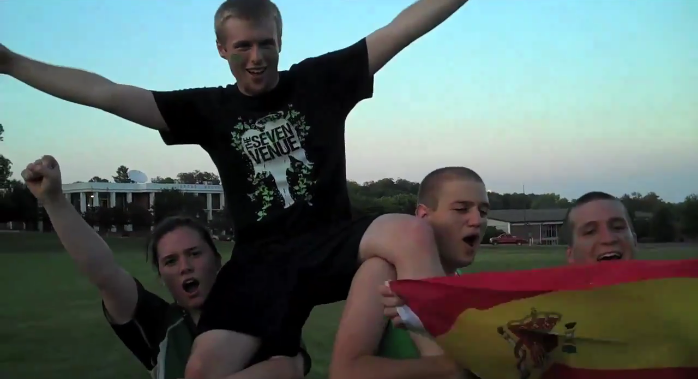
Week opens with a screening of the documentary I Speak Soccer (2009).  This film is about how soccer functions as an “international language” that transcends the barriers of language. (Shott Auditorium)

Class meets on drill field to play soccer during the rest of the week.  On Sunday we will participate in the Annual International Soccer Cup and compete with the Chinese, Russian, Arabic, Korean, and German Summer Programs.

21st Century Skills applied

National Standards for Foreign Languages: Communication, Cultures, Connections, Comparisons, Communities

Modes of Communication: Interpersonal, Interpretive,

Return to Spanish Immersion

Theater Activities

Yoga

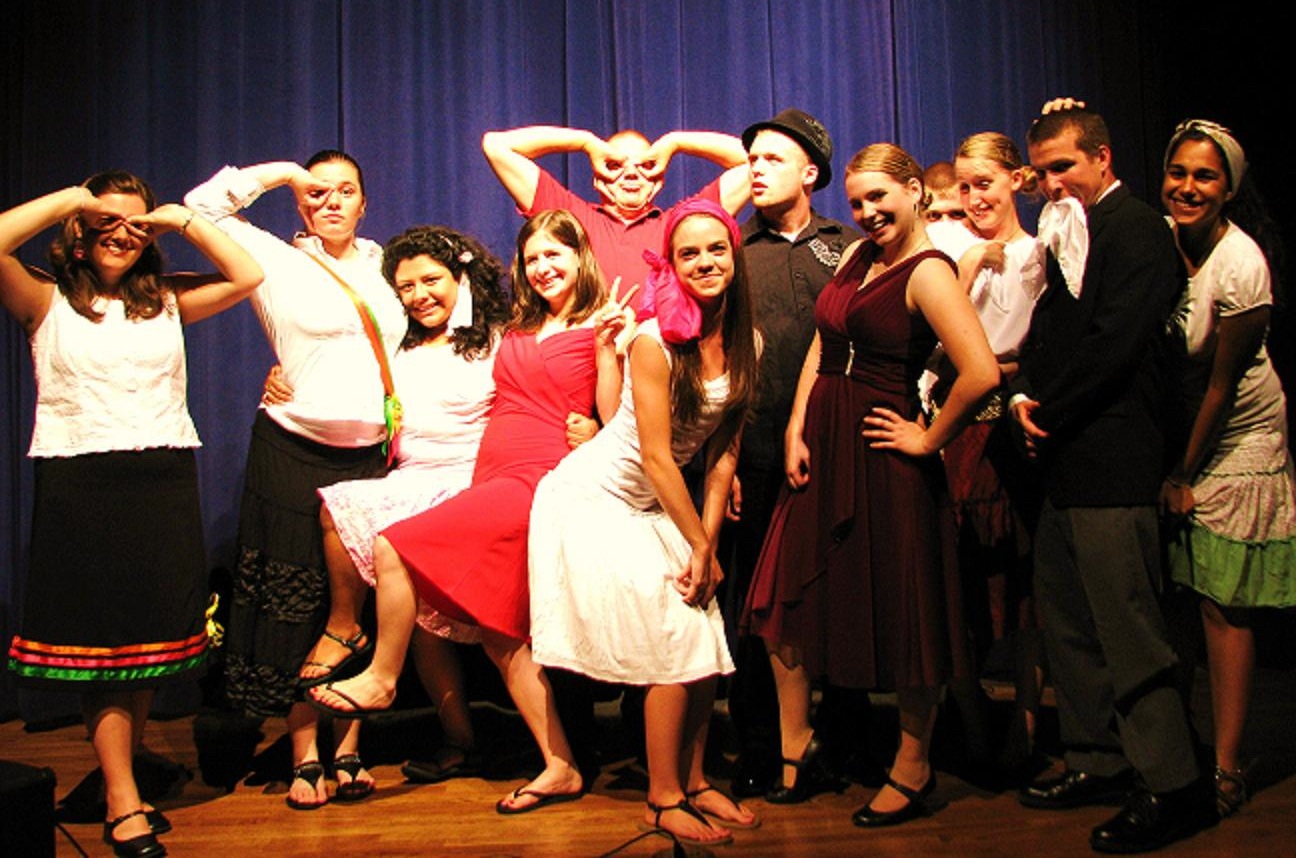
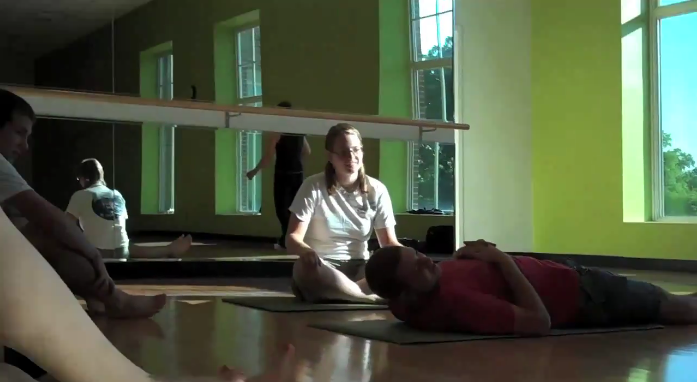
WEEK 1 THEATER

A series of improvisational acting exercises to warm you up to the immersion environment.

Starts with miming and rhythm activities and gradually progresses to simple speaking games, ending the week with games that use more imaginative and expressive language.

Wear loose and comfortable clothing.

(Class meets in Rec Center yoga studio. )

21st Century Skills applied

National Standards for Foreign Languages: Communication

Modes of Communication: Interpersonal

Return to Spanish Immersion

Music Activities

Social 3

WEEK 2 MUSIC

Week opens with a screening of the 1967 Cuban documentary Y tenemos sabor, featuring a catalog of traditional Afro-Cuban instruments and a contextualized and unassuming portrayal of “danceable” Cuban music, including traditional, folk, and popular genres (Shott Auditorium)

Lessons throughout the rest of the week will present and model traditional dances from Spain and Latin America:

salsa, sevillanas, tango, and choreographed pop-songs.

(Class meets in Memorial Hall Gym)

21st Century Skills applied

National Standards for Foreign Languages: Cultures, Comparisons, Communities

Modes of Communication: Interpersonal, Interpretive

Return to Spanish Immersion

Medical Spanish Course Syllabus

COURSE SYLLABUS

MEDICAL SPANISH

(pdf Course Syllabus Medical Spanish)

INSTRUCTOR Dr. Jennifer Formwalt

E-MAIL ADDRESS jmformwalt@ung.edu

CELL PHONE 706-429-4962

OFFICE 305A Dunlap Hall

REQUIRED TEXTS: Ortega, Pilar. Spanish and the Medical Interview. Saunders: Philadelphia, 2007. (with DVD).

COURSE DESCRIPTION

This course is designed to teach basic Spanish language to students that plan to work as health care professionals.

COURSE OBJECTIVES

In Medical Spanish (SPAN 1200), students will learn to conduct a 5-10 minute basic Medical Interview in Spanish and to work effectively with a professional Medical Interpreter.  In addition to learning the basic language skills necessary to conduct a preliminary Medical Interview in Spanish, students gain knowledge and understanding of different cultural perspectives to help them better anticipate and manage patient expectations during the medical encounter.

Spanish 1200 is designed to develop the following ACTFL (American Council of Teachers of Foreign Languages) standards and sub-standards:

Standard 1.1: Students engage in conversations, provide and obtain information, express feelings and emotions, and exchange opinions.  Standard 1.2: Students understand and interpret written and spoken language on a variety of topics.  Standard 1.3: Students present information, concepts, and ideas to an audience of listeners or readers on a variety of topics.  Standard 2.2: Students demonstrate an understanding of the relationship between the products and perspectives of the culture studied.  Standard 3.1: Students reinforce and further their knowledge of other disciplines through the foreign language.  Standard 3.2: Students acquire information and recognize the distinctive viewpoints that are only available through the foreign language and its cultures.  Standard 4.1: Students demonstrate understanding of the nature of language through comparisons of the language studied and their own.  Standard 4.2: Students demonstrate understanding of the concept of culture through comparisons of the cultures studied and their own.

METHODS OF INSTRUCTION- READ CAREFULLY

This course will be divided into 11 lessons corresponding to the 11 chapters of the course textbook. Each chapter will be covered in 1-3 days of class and students will have a brief vocabulary/ grammar quiz at the beginning of each class covering the previous lesson’s material. Students will conduct a mock medical interview with a native Spanish speaker

at the midterm of the semester. Students will also be responsible for 2 in-class cultural presentations of information related to the health care systems of assigned Latin American countries and the use of herbal remedies as alternative medicine in Latin America. Daily homework assignments will review information learned in class and prepare students for their mock interview, cultural presentations and a final semster project, to build a Profesisonal Portfolio. Students are expected to attend class regularly and should not exceed 4 absences.

FINAL GRADE (Please refer to links for project description and student instructions)

MOCK INTERVIEW 20%

PRESENTATIONS (NO. 1, NO.2) 30%

DAILY PARTICIPATION/ QUIZZES 10%

DAILY HOMEWORK ASSIGNMENTS (20) 10%

FINAL PROJECT-PROFESSIONAL PORTFOLIO 30%

LESSONS BY CHAPTER

1. BASICS OF CONVERSATIONAL SPANISH
2. SETTING THE STAGE DURING THE CLINICAL ENCOUNTER
3. HISTORY OF THE PRESENT ILLNESS
4. PAST MEDICAL HISTORY AND REVIEW OF SYSTEMS
5. MEDICATIONS AND DRUG EFFECTS
6. FAMILY HISTORY
7. SOCIAL AND SEXUAL HISTORY
8. MENTAL HEALTH
9. PREVENTATIVE HEALTH AND NUTRITION
10. PHYSICAL EXAM AND ANCILLARY SERVICES
11. KNOWING YOUR LIMITATIONS: WHEN AND HOW TO USE A MEDICAL INTERPRETER

Return to Medical Spanish

Final Project: Professional Portfolio

Final Project: Professional Portfolio*

The objectives of this project are: to synthesize and organize the information learned throughout the semester as a resource that may be consulted in the future, to guide the student in reflection on the specific application of the knowledge learned in this course in their future career as a health care professional and to assess student mastery of the grammar and vocabulary learned in this course.

*click link to access project template

21st Century Skills applied

National Standards for Foreign Languages: Communication, Cultures, Connections, Comparisons, Communities

Modes of Communication: Interpersonal, Interpretive, Presentational

Information, Media, and Technology Skills: Communication, Collaboration, Critical Thinking and Problem Solving, Creativity and Innovation, Information Literacy, Technology Literacy

Life and Career Skills: Initiative and Self-Direction, Social and Cross-Cultural Skills, Productivity and Accountability, Leadership and Responsibility

Return to Medical Spanish